
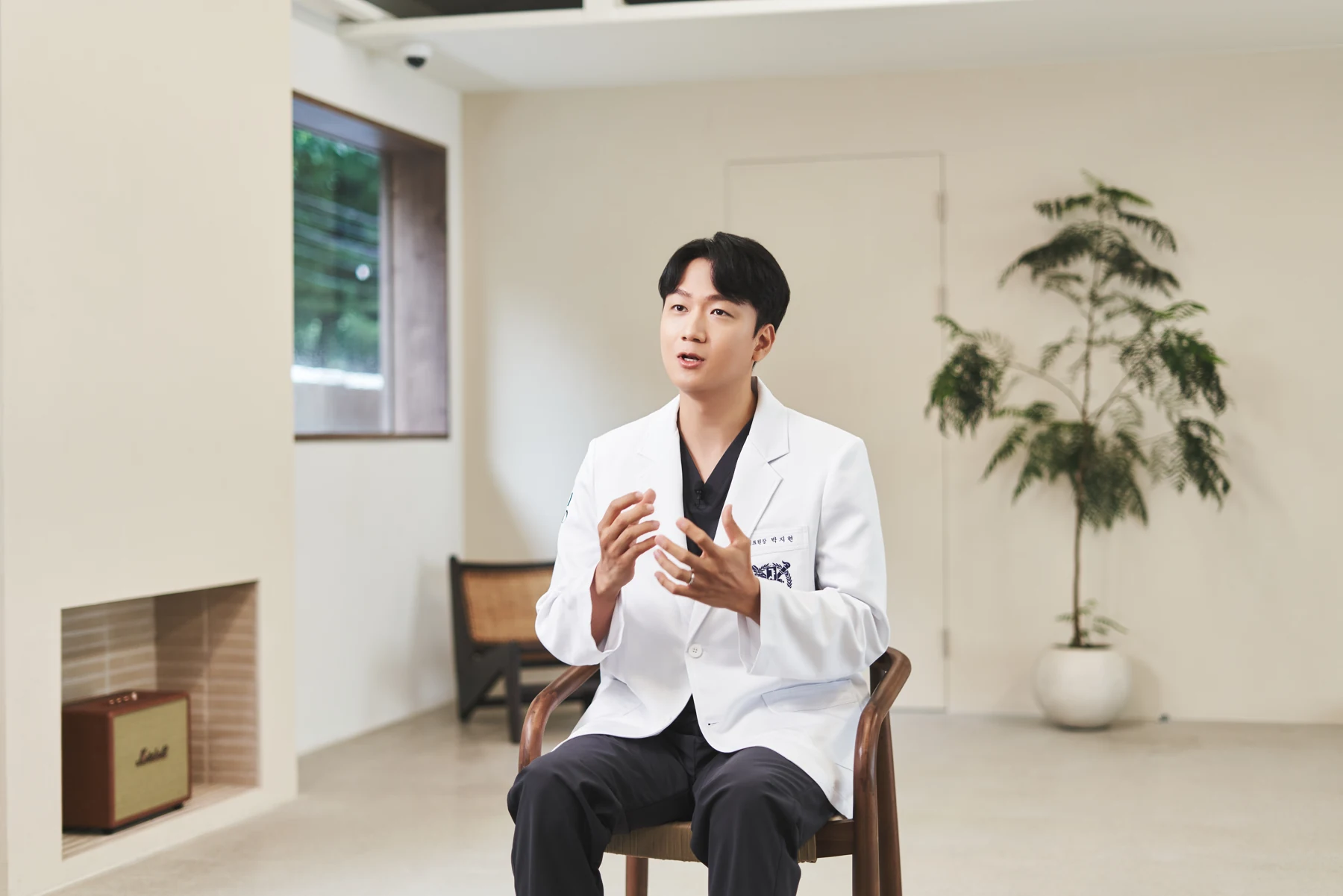
When I think about the completion of restorative treatment, I picture a meal. I consider whether the front teeth look right to the person, whether one side seems to touch first on closing, and what chewing and cleaning between teeth will be like. A restoration is not an object to admire in a clinic. It is a tooth used in the mouth every day.
An attractive shape matters. But so do the gums beneath it, the neighboring teeth and the relationship between upper and lower teeth. I do not see appearance and function simply as two things that must compromise with each other. Connecting them in the design is central to prosthodontic care. I want to consider the part and the whole so that a tooth that looks good also feels at home in everyday use.
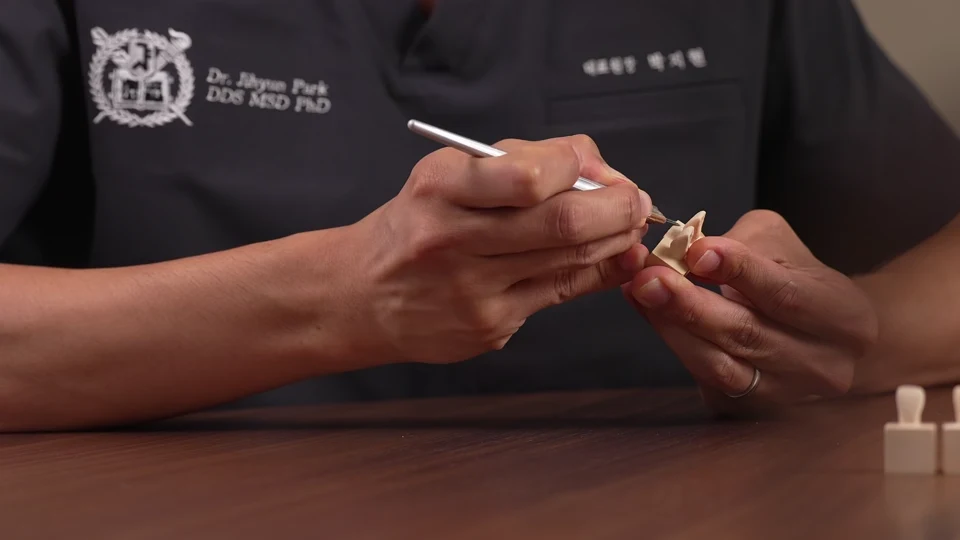
Even with one tooth, I consider its surroundings
Teeth are not independent pieces lined up beside one another. They relate to neighboring teeth, to teeth in the opposite jaw, and to the gums around them. That is why the outline of one tooth alone cannot settle the shape of a restoration.
When someone wants to change the length or color of a front tooth, I consider both the desired change and the existing conditions. How much of the adjacent teeth is visible? How will the new shape sit between lips and gums, and relate to the other teeth as the mouth closes and moves? I want the plan to account for how changing one part changes its relationships.
These connections become more important in full-mouth rehabilitation, where several teeth are restored together. Before completing each restoration separately, we need an overall goal for shape and bite. To me, the important issue is not simply the number of teeth being treated, but how consistently we judge the conditions linking them.
Gums are a foundation, not just a background
Gums matter in restorative treatment for more than their visibility in a smile. They are part of the health of the tissues supporting teeth. Gum disease causes inflammation around teeth and, as it progresses, can affect the supporting bone. It is difficult to separate renewing the visible tooth from assessing its foundation. [3]
I am cautious about deciding only the color and shape of a restoration when gums are swollen or bleed easily. We need to identify what the current condition relates to and consider the order of treatment and care. Findings from the assessment should inform the treatment process so that the environment around the new restoration is addressed too.

Dr Park Jihyun explaining with images on a screen
Gum height and contour also influence how teeth look. Even restorations of the same imagined length can create different impressions depending on the surrounding gums and teeth. For me, aesthetic restorative design does not finish with shaping the white part. It includes considering the foundation on which that shape will sit.
I consider the necessary extent before the name of a treatment
A crown covers a tooth to restore function and appearance. It may be considered for a heavily damaged tooth or one with a large restoration, but not every situation calls for the same extent of treatment. Considering alternatives such as inlays or onlays, where appropriate, is also an important part of restorative care. [2]
When explaining the extent of treatment, I think about what will remain as well as what will be made. This means assessing the remaining tooth and the support and coverage required. More coverage is not always better, and a smaller restoration is not appropriate in every condition. The extent should have a reason grounded in that tooth's circumstances.
For a patient to understand treatment, the conclusion 'we will make a crown' is not enough. They need to understand which part of the tooth has a problem and why that area needs restoring. Before moving straight to materials or cost, I want the explanation to address the relationship between the remaining tooth and what we aim to rebuild.
Function should stay in view while the shape is designed
Occlusion is the relationship between upper and lower teeth as they meet. Adding a restoration also adds a new shape to that relationship. I consider both the appearance with the mouth open and the way the tooth is used with the mouth closed. This reflects Seoul Yido Dental Clinic's aim to address aesthetic quality and a functional bite together. [1]
The wish to change a tooth's length or thickness deserves discussion. At the same time, we need to judge how that change would affect contact with other teeth. Fixing the desired appearance first and fitting function around it later can leave important conditions unnoticed until too late. I want use to be part of the design from the beginning.
The sensations after treatment also inform that judgment. Liking the appearance and feeling comfortable while chewing need separate attention. I believe we should not dismiss a report that something touches first or feels uncomfortable simply as unfamiliarity with a new tooth. I want to respect both what we can observe and what the person using it feels.
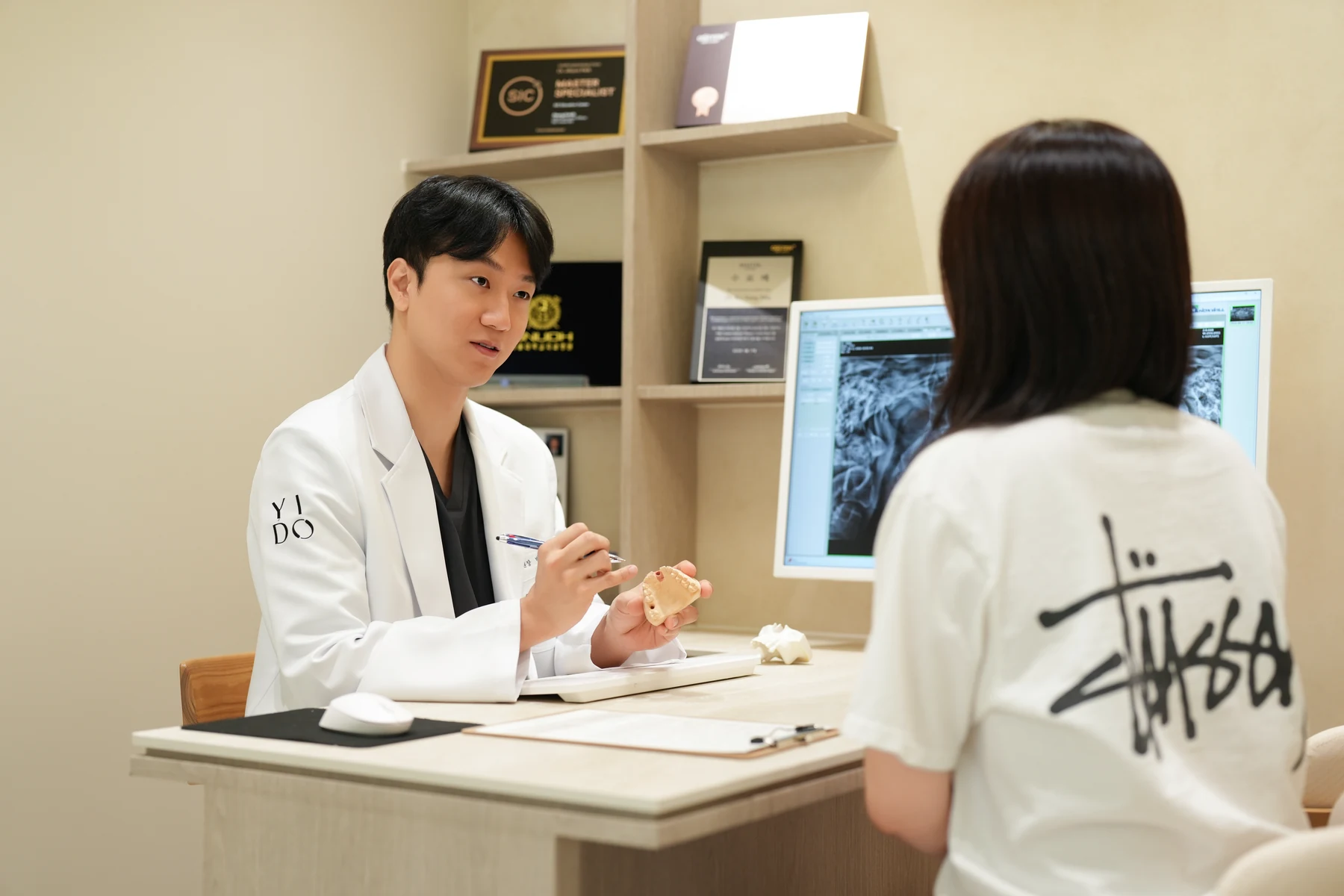
Dr Park Jihyun in conversation in the consultation room
A material's name cannot replace a design
There are several restorative materials to consider. Crowns alone may use metal, porcelain fused to metal or ceramic. I do not want a choice to end with the impression created by a material's name. Even the same material raises different planning considerations depending on the tooth and the extent of restoration. [2]
Choosing a material and deciding how to design and fabricate with it are different tasks. We first need to clarify the desired appearance, the remaining tooth and the surrounding relationships so that the fabrication goal is clear. I believe the original assessment and objectives should remain connected to the decision about material.
Seoul Yido Dental Clinic has an on-site dental laboratory. To me, it is more than a place out of the patient's sight where tooth shapes are made. It is where the clinical plan becomes a physical restoration. More than the laboratory's presence itself, I value clearly communicating the shape and relationships that fabrication is intended to achieve. [4]
For example, the word 'natural' alone cannot fully describe a desired tooth. Which length and contours should be retained? How should it blend with neighboring teeth? These details need to be made concrete. I regard this careful communication as part of restorative design, rather than an incidental conversation before fabrication.
Long-term use belongs in the initial design
A restoration will be used for far longer than it takes to make and fit it in the clinic. I want to consider ongoing care when planning treatment. Seoul Yido Dental Clinic's stated approach is for maintenance to continue in line with a person's habits and oral environment after treatment ends. [1]
Areas that feel difficult to clean and changes that develop with use should be assessed at follow-up. Having a restoration does not remove the need to care for the surrounding teeth and gums. Daily gum care and regular dental visits remain important after restorative treatment. I hope patients understand what needs looking after, as well as the shape of the completed tooth. [3]
To me, a good restoration cannot be described only by how beautiful it looks on its own. It should be considered among that person's gums and teeth, in meals and conversations, and as something they can care for every day. As a prosthodontist, I aim to attend to these connections throughout care. Thinking about eating comfortably and smiling naturally again is why I pay such close attention to form.
Photography · Seoul Yido Dental Office
About this column
This first-person column was composed by the editorial team using the clinician's fields of practice and the clinic's care philosophy.
References and sources
- Seoul Yido Dental Office · Supplied brand guide and brand story (opens a new tab)
The clinic’s name, values and philosophy, as described in its brand guide.
- American College of Prosthodontists · Caps and Crowns (opens a new tab)
Professional guidance on the purpose and materials of crowns and alternatives such as inlays and onlays where appropriate.
- US NIH · NIDCR · Periodontal (Gum) Disease (opens a new tab)
Patient education on gum disease causes, symptoms, diagnosis and daily care.
- Seoul Yido Dental Clinic · Supplied clinician and on-site laboratory information (opens a new tab)
The on-site laboratory is described in clinician and facility information supplied by the clinic. This is not a guarantee of treatment results or fabrication times.